Get Support
+8801977426642

ProSim 2 and 3 Vital Sign Simulators in Bangladesh
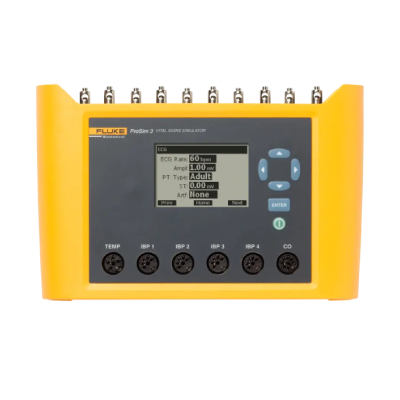
The ProSim 2 and ProSim 3 Vital Sign Simulators are compact biomedical test tools designed for verifying and troubleshooting patient monitors. In Bangladesh, these simulators are widely used in hospitals, clinics, diagnostic centers, and biomedical service companies to ensure that vital sign monitors display accurate readings before they are used on patients.
Both ProSim 2 and ProSim 3 are portable, easy to use, and suitable for routine performance checks as well as field service work, helping biomedical engineers save time while maintaining a high level of safety and accuracy.
Pico Labs Limited is a reliable technology provider in Bangladesh where you can explore a wide range of Biomedical Test Equipment at the best price. From hospitals and clinics to diagnostic centers and biomedical engineering departments, you can find professional analyzers, simulators, and test tools for accurate performance checking of medical devices like infusion pumps, defibrillators, patient monitors, incubators, and ventilators.
Overview of ProSim 2 and ProSim 3
- ProSim 2 is typically designed for essential vital sign simulation, ideal for quick checks and basic testing of patient monitors.
- ProSim 3 offers more advanced simulation options, making it suitable for a wider range of monitoring parameters and more detailed testing requirements.
These simulators allow users to simulate vital signs instead of connecting the device to a real patient, which is safer, faster, and more controlled.
Additional Capabilities
-
ProSim 2
-
Focus on core vital signs
-
Ideal for basic patient monitor checks
-
Cost-effective solution for smaller facilities
-
-
ProSim 3
-
Extended parameter simulation (depending on configuration)
-
Better suited for larger hospitals or service companies
-
More flexibility in test scenarios and troubleshooting
-
Example Comparison Table: ProSim 2 vs ProSim 3
The following table provides a simplified comparison to understand the positioning of both simulators. Actual specifications and parameters may vary by configuration.
| Feature / Parameter | ProSim 2 (Typical) | ProSim 3 (Typical) |
|---|---|---|
| Primary Use | Basic vital sign simulation | Extended vital sign simulation |
| Portability | High – compact handheld | High – slightly more advanced unit |
| User Interface | Simple buttons/menu | Enhanced menu with more options |
| Vital Sign Parameters | Core parameters | Core + additional parameters |
| Target Users | Small/medium hospitals, clinics | Large hospitals, service providers |
| Power Source | Battery and/or external supply | Battery and/or external supply |
| Typical Application | Routine quick checks | Routine + advanced testing and troubleshooting |
This table is for general understanding only and not a formal specification sheet.
Applications in Bangladesh
In Bangladesh, ProSim 2 and 3 Vital Sign Simulators are commonly used in:
- Biomedical engineering departments of public and private hospitals
- Diagnostic and specialized centers with multiple patient monitors
- Independent biomedical service providers offering maintenance and calibration
- Medical equipment distributors for demonstration and quality checks
These simulators help verify that patient monitors correctly measure and display vital signs such as heart rate and other parameters, depending on the model configuration.
Benefits for Hospitals and Biomedical Teams
Using ProSim 2 and ProSim 3 brings several benefits:
-
Improved Patient Safety
By regularly testing monitors with a vital sign simulator, hospitals significantly reduce the risk of incorrect readings during real patient monitoring. -
Time-Saving Workflow
Quick simulation presets and an easy interface allow biomedical engineers to perform checks faster compared to manual or improvised methods. -
Standardized Testing
Simulators support the creation of standard operating procedures (SOPs), ensuring consistent test results across departments and facilities. -
Cost-Effective Maintenance
Early detection of issues reduces downtime, prevents emergency breakdowns, and can prolong the life of patient monitoring equipment. -
Support for Accreditation and Audits
Documented and standardized testing using simulators helps hospitals during quality audits and accreditation processes.
Choosing Between ProSim 2 and ProSim 3 in Bangladesh
When deciding between ProSim 2 and ProSim 3, organizations in Bangladesh should consider:
- Type and number of patient monitors in their facility
- Required parameters for testing (basic vs extended)
- Budget and long-term maintenance strategy
- Available technical staff and skill level
Smaller clinics and facilities needing basic checks may prefer ProSim 2 for its simplicity and cost-effectiveness. Larger hospitals, diagnostic centers, and service companies that handle a broad range of monitors may find ProSim 3 more suitable due to its extended capabilities.
The ProSim 2 and ProSim 3 Vital Sign Simulators play a valuable role in the healthcare ecosystem of Bangladesh by helping ensure that patient monitors are accurate, reliable, and safe for clinical use. Their portable design, ease of operation, and suitability for routine testing make them an essential part of any biomedical maintenance toolkit.
Key Features: ProSim 2 and 3 Vital Sign Simulators
Both ProSim 2 and ProSim 3 generally offer:
- Portable design – lightweight and easy to carry for on-site service
- User-friendly interface – simple controls for quick test setup
- Battery operation – suitable for field work and mobile use
- Quick simulation presets – to rapidly test common monitor settings
- Durable construction – designed for daily use in clinical and service environments
Specifications: ProSim 2 and 3 Vital Sign Simulators
- Coming Soon.