Get Support
+8801977426642

Impulse 7010 Defibrillator Selectable Load Accessory in Bangladesh
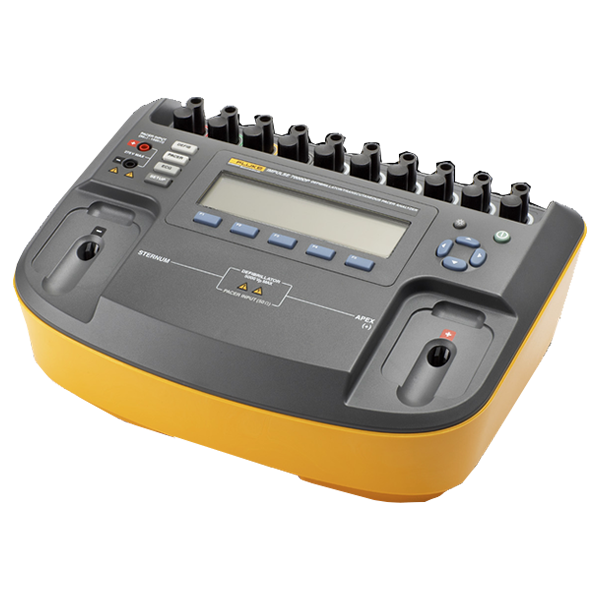
The Impulse 7010 Defibrillator Selectable Load Accessory is a specialized add-on device used along with defibrillator analyzers to simulate different patient impedances. In Bangladesh, this accessory is particularly useful in hospitals, cardiac centers, ICUs, emergency departments, and biomedical calibration labs where regular testing and verification of defibrillators is a critical part of preventive maintenance.
By providing different selectable load values, the Impulse 7010 allows biomedical engineers and technicians to test defibrillators under multiple realistic conditions, ensuring that the device delivers accurate energy across a range of patient scenarios.
Role of Selectable Load in Defibrillator Testing
When a defibrillator delivers a shock, the actual energy delivered depends on the patient’s impedance. In real life, patient impedance varies from person to person. A fixed load cannot fully represent these variations. This is where the Impulse 7010 comes in: it offers multiple selectable load options so that defibrillators can be tested more realistically.
Key benefits of using selectable load:
- Simulates different patient impedance levels
- Helps verify energy delivery accuracy at various impedances
- Supports compliance with internal and external quality standards
- Improves confidence in defibrillator performance during real emergencies
Key Features of Impulse 7010 Defibrillator Selectable Load Accessory
The Impulse 7010 is designed to be a simple but powerful companion to defibrillator analyzers. Some common feature points include:
- Multiple selectable impedance values to represent different patient conditions
- Easy rotary or switch-based selection for quick load changeover
- High power handling capability suitable for full defibrillator shock energy
- Rugged design built to withstand repeated shock testing
- Clear load labeling for error-free selection during tests
- Compatible with specific defibrillator analyzers in the same family
These features make it a practical accessory for biomedical engineers working in busy clinical environments.
Example Technical Overview Table
The following table gives a general, simplified technical overview of what such a selectable load accessory typically offers. Actual specifications may vary depending on configuration and model details.
| Parameter | Typical Description |
|---|---|
| Load Impedance Options | Multiple ohm settings (e.g. low to high) |
| Load Selection Method | Selector switch / rotary knob |
| Maximum Energy Handling | Suitable for full defibrillator shock range |
| Compatibility | For use with selected defib analyzers |
| Connection Interface | Standard defibrillator test connections |
| Mechanical Design | Bench-top or portable, robust housing |
| Indication | Clear marking for each impedance value |
| Use Case | Routine testing and calibration of defibs |
This table is for general understanding and not a formal datasheet.
Importance in the Context of Bangladesh
In Bangladesh, many hospitals and clinics are upgrading their emergency response and cardiac care facilities. As defibrillator usage increases, so does the need for accurate and regular testing. The Impulse 7010 Defibrillator Selectable Load Accessory plays an important role in this context by:
- Allowing more realistic testing of defibrillators at different impedance levels
- Helping biomedical teams identify performance issues that might not appear under a single fixed load
- Supporting preventive maintenance programs, thereby reducing sudden device failure in emergencies
- Enhancing overall patient safety and quality of care in critical situations
For biomedical engineering departments, adding this accessory to their test setup is an effective way to improve the quality and depth of their defibrillator evaluations.
Typical Users and Applications
The Impulse 7010 Load Accessory is commonly used by:
- Biomedical engineering departments in large hospitals
- Third-party service providers offering defibrillator calibration and maintenance
- Emergency and ICU teams in collaboration with technical staff for regular checks
- Training centers and institutes that teach medical equipment maintenance
Using this accessory, teams can build standardized test protocols involving multiple impedance scenarios, which helps in documenting and proving the reliability of defibrillators during audits or accreditation reviews.
Factors to Consider When Using or Purchasing in Bangladesh
If you are planning to integrate or purchase the Impulse 7010 Defibrillator Selectable Load Accessory in Bangladesh, consider the following points:
-
Analyzer Compatibility
Make sure the load accessory is compatible with the specific defibrillator analyzer model you are using. -
Training and Usage
Ensure that your biomedical staff are trained in proper connection, load selection, and safety procedures when applying defibrillator shocks into the load. -
Durability and Build Quality
Since it is repeatedly exposed to high-energy shocks, the accessory should be robust and reliable. -
Calibration and Verification
Although it is a passive accessory, periodic functional verification is recommended to make sure the load values remain within acceptable tolerances. -
Integration into SOPs
Include the use of the Impulse 7010 in your standard operating procedures (SOPs) for defibrillator testing and preventive maintenance.
The Impulse 7010 Defibrillator Selectable Load Accessory is a valuable tool for biomedical professionals in Bangladesh who want to elevate the accuracy and realism of defibrillator testing. By providing multiple selectable impedance levels, it allows defibrillators to be tested under conditions that more closely resemble real patients.
Key Features: Impulse 7010 Defibrillator Selectable Load Accessory
- Replicates all patient transthoracic impedance loads from infants to overweight adults
- Simulates user-selectable impedances as high as 200 ohms accurately
- Meets all defibrillator quality testing standards (IEC 60601-2-4 and AAMI DF80)
- Only compatible with the Impulse 7000DP
Specifications: Impulse 7010 Defibrillator Selectable Load Accessory
- Coming Soon.