Get Support
123-456-789-10

Impulse 6000D Defibrillator Analyzer and Tester Price in Bangladesh
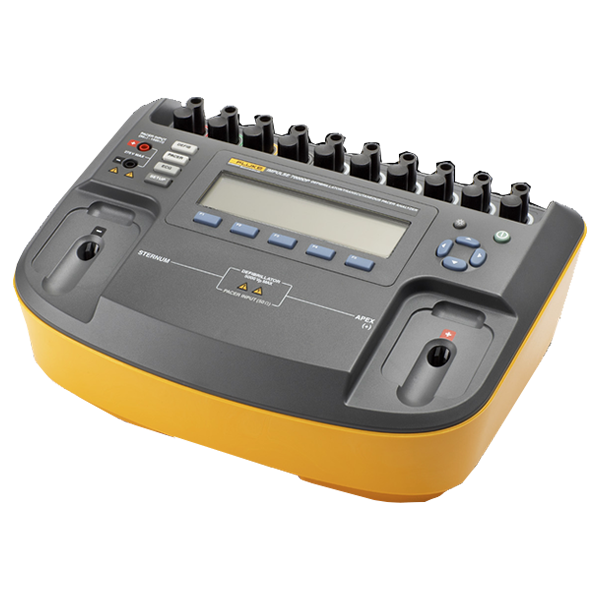
The Impulse 6000D Defibrillator Analyzer and Tester is a professional biomedical test instrument used to verify the performance, safety, and accuracy of defibrillators. In Bangladesh, it is mainly used in hospitals, cardiac centers, emergency care units, and biomedical calibration labs to ensure that life-saving defibrillator devices are working properly before being used on patients.
Pico Labs Limited is a reliable technology provider in Bangladesh where you can explore a wide range of Biomedical Test Equipment at the best price. From hospitals and clinics to diagnostic centers and biomedical engineering departments, you can find professional analyzers, simulators, and test tools for accurate performance checking of medical devices like infusion pumps, defibrillators, patient monitors, incubators, and ventilators.
Price of Impulse 6000D in Bangladesh
The price of the Impulse 6000D Defibrillator Analyzer and Tester in Bangladesh can vary depending on:
- Official supplier or distributor
- Included accessories and options
- Warranty and after-sales service
- Import duties and logistics cost
Typically, it falls into the premium price range compared to basic test equipment, because it is a highly specialized, multi-parameter analyzer designed for critical care equipment. For an exact quotation in BDT, buyers usually need to contact an authorized local supplier or biomedical equipment provider, who can share updated pricing, availability, and delivery time.
Key Features of Impulse 6000D Defibrillator Analyzer and Tester
The Impulse 6000D is designed to make defibrillator testing faster, safer, and more accurate. Some common features include:
- Defibrillator energy measurement (Joules) across multiple energy levels
- Pacing function testing for pacer-capable defibrillators
- SpO₂ and ECG simulation in combination with supporting modules (where applicable)
- High-resolution display to view waveforms and readings clearly
- Internal load selections to simulate patient impedance
- Data storage and PC connectivity (model-dependent) for reporting and documentation
- Portable design for use in different departments or on-site service
These features help biomedical engineers and technicians quickly verify whether a defibrillator can deliver the correct shock energy and pacing output.
Technical Overview (Sample Specification Table)
Below is a general, simplified technical overview table for understanding this type of analyzer. Actual values may vary by batch, options, or configuration.
| Parameter | Typical Range / Description |
|---|---|
| Defibrillator Energy Range | Up to high-energy shocks (e.g. 360 J) |
| Energy Accuracy | High accuracy within a small tolerance |
| Waveform Type Support | Monophasic & Biphasic defibrillators |
| Pacer Pulse Rate | Testing various bpm ranges |
| Pacer Pulse Amplitude | Supports multiple mA ranges |
| Load Impedance Options | Multiple ohm settings to simulate patient |
| Display | Digital, with numerical and waveform |
| Data Interface | PC/USB or serial (model dependent) |
| Power | AC mains and/or battery operation |
| Portability | Compact, field-service friendly design |
Note: This table is for illustrative technical understanding and not a formal datasheet.
Why It Is Important for Hospitals and Labs in Bangladesh
In cardiac emergencies, a malfunctioning defibrillator can be life-threatening. That’s why regular testing with a reliable analyzer like the Impulse 6000D is essential. In Bangladesh, where many hospitals are upgrading their critical care and emergency departments, this type of device offers several advantages:
- Ensures defibrillators deliver accurate energy according to the set value
- Helps maintain compliance with hospital, accreditation, and safety standards
- Reduces the risk of under-shock or over-shock, both of which are dangerous
- Supports preventive maintenance programs for biomedical departments
- Enhances patient safety and clinician confidence in emergency procedures
Typical Applications
The Impulse 6000D Defibrillator Analyzer and Tester is commonly used by:
- Biomedical engineering departments in public and private hospitals
- Third-party biomedical service companies providing calibration and maintenance
- Cardiology and ICU units for periodic verification
- Training institutes teaching defibrillator maintenance and testing
By integrating this analyzer into their maintenance schedule, organizations can create a standardized testing protocol for all defibrillators in their inventory.
Factors to Consider Before Buying in Bangladesh
Before purchasing an Impulse 6000D Defibrillator Analyzer and Tester in Bangladesh, buyers should consider:
-
Authorized Supplier
Ensure that the supplier is recognized and can provide original devices with proper documentation. -
After-Sales Support
Check if they offer installation, user training, local technical support, and calibration services. -
Warranty and Service Contracts
Look for warranty terms and optional Annual Maintenance Contracts (AMC) or calibration contracts. -
Calibration and Certification
Confirm that the analyzer itself can be periodically calibrated at an accredited lab, so test results remain reliable. -
Total Cost of Ownership
Consider not only the purchase price, but also maintenance, calibration, accessories, and software over several years.
The Impulse 6000D Defibrillator Analyzer and Tester plays a vital role in ensuring that defibrillators in Bangladesh operate safely and accurately in life-saving situations. Although it sits in a higher price bracket, its precision, reliability, and comprehensive testing capabilities make it a valuable investment for hospitals, diagnostic centers, and biomedical service providers.
Key Features: Impulse 6000D Defibrillator Analyzer and Tester
- IEC 60601-2-4 Compliance
- Lown, Edmark, trapezoidal, biphasic and pulsed-biphasic defibrillation technology compatibility
- AED compatibility
- 12-lead ECG simulation
- Internal pacer brand selections
- Flexible heart-rate settings (1BPM step)
- DSP-based measurements for firmware and waveform upgrade
- Waveform capture, store and replay
- First-in-class accuracy ± 1% of reading + 0.1J
- Long lasting, rechargeable battery
Specifications: Impulse 6000D Defibrillator Analyzer and Tester
- Coming Soon.