Get Support
+8801977426642

Fluke ESA710 Electrical Safety Analyzer in Bangladesh
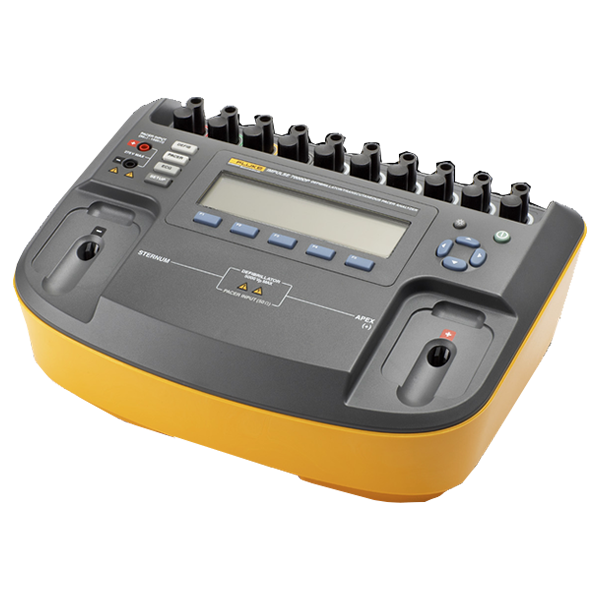
The Fluke ESA710 Electrical Safety Analyzer is designed for essential electrical safety testing of medical equipment in a simple, reliable, and cost-effective way. In Bangladesh, it is suitable for hospitals, clinics, diagnostic centers, biomedical departments, and service providers that need to carry out regular safety checks but do not require the full feature set of higher-end analyzers.
With a focus on core safety measurements, the ESA710 helps ensure that medical devices are electrically safe for patients, operators, and maintenance staff, supporting a safer healthcare environment and smoother compliance with internal safety policies. Pico Labs Limited is a reliable technology provider in Bangladesh where you can explore a wide range of Biomedical Test Equipment at the best price. From hospitals and clinics to diagnostic centers and biomedical engineering departments, you can find professional analyzers, simulators, and test tools for accurate performance checking of medical devices like infusion pumps, defibrillators, patient monitors, incubators, and ventilators.
These features make the ESA710 a practical choice for facilities that are building or strengthening their basic electrical safety program.
Example Technical Overview Table
The table below presents a simplified overview of typical functions and characteristics of an electrical safety analyzer like the Fluke ESA710. Actual details may vary with configuration.
| Parameter / Function | Typical Description |
|---|---|
| Ground Wire Resistance | Measures continuity of the protective earth conductor |
| Equipment Leakage Current | Measures leakage from enclosure and mains circuitry |
| Test Modes | Selected modes for standard medical device categories |
| Display | Digital readout with numeric values |
| Test Sequences | Basic manual or simple guided sequences |
| Power Source | Mains-powered instrument |
| Portability | Suitable for field use and workshop benches |
| Operation | Front-panel buttons and straightforward menus |
| Application Environment | Hospitals, clinics, labs, service centers |
| Primary Use | Routine electrical safety checks |
This table is for general understanding and not a formal datasheet.
Applications of ESA710 in Bangladesh
In Bangladesh, many healthcare facilities are in the process of improving their maintenance and safety practices. The Fluke ESA710 Electrical Safety Analyzer supports this by offering a reliable tool for everyday testing, including:
-
Hospital Biomedical Units
Used to perform scheduled electrical safety checks on general-purpose medical equipment such as patient monitors, infusion pumps, suction machines, and other bedside devices. -
Clinics and Smaller Facilities
Ideal for clinics and medium-sized diagnostic centers that need to verify the safety of their electrically powered equipment without investing in more advanced analyzers. -
Service and Maintenance Providers
Suitable for companies and independent technicians who provide basic safety testing services to multiple healthcare sites. -
Equipment Workshops
Useful in pre-delivery inspections and after-repair checks to ensure that devices leaving the workshop meet minimum electrical safety criteria.
By integrating the ESA710 into regular workflows, organizations can reduce the risk of electrical incidents and maintain higher safety standards.
Benefits for Hospitals and Biomedical Teams
The Fluke ESA710 Electrical Safety Analyzer offers several advantages, especially for facilities that are building up their testing capability:
-
Improved Electrical Safety
Regular testing of ground continuity and leakage currents helps protect patients and staff from potential electric shock or equipment malfunction. -
Simplified Operation
The instrument focuses on core functions, making it easier for biomedical staff and technicians to learn and use it correctly, even if they have limited experience with electrical test equipment. -
Consistent Basic Testing
Using a single, dedicated analyzer encourages standardized procedures for electrical safety across different departments and sites. -
Cost-Effective Entry Point
For facilities that do not yet require advanced analysis features, the ESA710 provides an economical way to introduce or formalize electrical safety testing. -
Support for Preventive Maintenance
Integrating safety tests into routine maintenance allows early detection of electrical issues and helps avoid unplanned downtime or urgent repairs.
Typical Test Workflow with ESA710
A typical workflow for using the ESA710 in a Bangladeshi healthcare facility might include:
-
Initial Visual Inspection
Check the device’s power cord, plug, casing, and connectors for visible damage or wear. -
Ground (Earth) Resistance Test
Connect the analyzer to the equipment and measure the continuity of the protective earth path to ensure it is within acceptable limits. -
Enclosure / Equipment Leakage Test
Measure any leakage current that might flow from the equipment housing or mains circuitry under normal and single-fault conditions (as configured). -
Result Evaluation
Compare measured values with internal safety limits or applicable guidelines to determine pass/fail status. -
Documentation
Record test results in maintenance logs or digital systems, associating them with the device ID and test date for future reference.
This simple, repeatable process can be scaled across many devices and departments, helping build a consistent safety culture.
Considerations Before Using or Purchasing in Bangladesh
Before adopting the Fluke ESA710 Electrical Safety Analyzer in your organization, it is helpful to review:
-
Scope of Equipment to Be Tested
Confirm that the types of medical devices you use match the testing capabilities offered by the ESA710 and that its functions cover your basic safety requirements. -
Training Needs
Provide fundamental training on test setup, electrical safety principles, and correct interpretation of readings so users can operate the analyzer safely and effectively. -
Calibration and Verification
Plan periodic calibration of the analyzer to maintain accuracy and confidence in measurement results, especially when they are used for compliance or audit purposes. -
Integration with Maintenance Plans
Include ESA710 tests as part of scheduled maintenance, commissioning of new devices, and post-repair checks. -
Record-Keeping Practices
Establish a simple but robust system for recording test results; this will be valuable during internal reviews, external inspections, and quality audits.
The Fluke ESA710 Electrical Safety Analyzer provides a solid foundation for electrical safety testing of medical equipment in Bangladesh. Its focus on essential tests, user-friendly interface, and practical portability make it well-suited to hospitals, clinics, biomedical departments, and maintenance providers that need dependable, everyday safety verification.
Key Features: Fluke ESA710 Electrical Safety Analyzer
The ESA710 is aimed at users who need straightforward, essential electrical safety tests without unnecessary complexity. Typical features include:
- Core electrical safety tests for medical equipment
- Ground (earth) resistance measurement to verify protective earth integrity
- Equipment leakage current testing for enclosure and mains leakage
- Simple test modes tailored to common equipment types
- Clear digital display for easy reading of measurement values
- Intuitive control layout that reduces operator error
- Portable and robust design for both bench and on-site testing
- Optimized for routine checks and basic safety verification
Specifications: Fluke ESA710 Electrical Safety Analyzer
| Parameter | Specification |
|---|---|
| Safety Standard Compliance | IEC 61010-1: Overvoltage category II, pollution degree 2 IEC 61010-2-034: Measurement CAT II 300 V |
| Dimensions (W x D x H) | 214 x 207 x 92 mm (8.4 x 8.1 x 3.6 in) |
| Weight | 1.3 kg (2.7 lbs) |
| Ingress Protection | IP40 (excluding equipment outlet) |
| Operating Temperature | 0 to +35 °C (50 to 95 °F) |
| Operating Humidity | 10–90%, non-condensing |
| Storage Temperature | -20 to +60 °C (-4 to +140 °F) |
| Storage Humidity | 5–95%, non-condensing |
| Altitude | ≤5000 m @ 100–127 V, ≤2000 m @ 200–240 V |
| Battery Life | Up to 2 hours |
| Connectivity | 1× USB-C (PC), 2× USB-A (peripherals) |
| Display | 5-inch touchscreen |
| Data Storage | >10,000 measurements |
| Power | Multiple ranges: • 90–132 V AC, 20 A MAX, 47–63 Hz • 90–132 V & 180–264 V AC, 15 A or 16 A MAX |
| CSA Approval | Yes (US version and NEMA 6-15 version) |
| EMC | See user manual |
Measurement Specifications
| Category | Parameter | Specification |
|---|---|---|
| Mains Voltage | Range | 0–264 V AC RMS |
| Accuracy | ±(2% + 0.2 V) | |
| Point to Point Voltage | Range | 0–300 V AC RMS |
| Accuracy | ±(2% + 0.2 V) | |
| Earth & Point-to-Point Resistance | Range | 0–20 Ω |
| Accuracy | ±(1% + 0.01 Ω) at ≤2 Ω, ±(1% + 0.1 Ω) at >2 Ω | |
| Test Current | Square wave ±200 mA | |
| Open Circuit Voltage | Max ±24 V |
Equipment Current
| Parameter | Specification |
|---|---|
| Range | 0–20 A AC RMS |
| Accuracy | ±(5% + 0.05 A) |
| Duty Cycle | 0–10 A: continuous 0–15 A: 5 min on / 5 min off 15–20 A: 3 min on / 7 min off |
Leakage Current
| Parameter | Specification |
|---|---|
| Modes | AC + DC (True RMS), AC only, DC only |
| Crest Factor | ≤2 |
| Range | 0 µA – 20 mA |
| Accuracy |
|
| Main Test Voltage | Mains ±5% |
| Current Limit | 1 mA ± 25% at 115 V |
| Uncertainty | ±2 µA at 120 V, ±4 µA at 230 V |
Insulation Resistance
| Parameter | Specification |
|---|---|
| Test Voltages | 50 V, 100 V, 250 V, 500 V DC |
| Range (250/500 V) | 0.1–100 MΩ |
| Accuracy | ±(2% + 0.2 MΩ) at ≤10 MΩ ±(7.5% + 0.2 MΩ) at >10 MΩ |
| Range (50/100 V) | 0.1–20 MΩ |
| Accuracy | ±(10% + 0.2 MΩ) |
| Voltage Accuracy | +20%/-0% (250/500 V), +30%/-0% (50/100 V) |
| Short-Circuit Current | 2 mA ± 0.25 mA |
| Max Load Capacitance | 2 µF |
ECG Simulation
| Parameter | Specification |
|---|---|
| Frequency Accuracy | ±2% |
| Amplitude Accuracy | ±5% (for 2 Hz square wave) |
| Waveforms | ECG complex (30–240 BPM), Square (0.125/2 Hz), Triangle (2 Hz), Pulse (30/60 BPM), Ventricular fibrillation |
Respiration Simulation
| Parameter | Specification |
|---|---|
| Rate | Apnea (0 BrPM) and 10–100 BrPM in 10 BrPM steps |
| Waveform | Normal |
| Inspiration: Expiration Ratio | 1:1 |
| Impedance Baseline | 1000 Ω ± 5% |
| < strong>Impedance Variation | 1 ± 0.15 Ω |
| Respiration Lead | LL or LA (user selectable) |